There’s a reason Scotland holds on to its stories.
It isn’t just that the land is old, though it is. Or that the weather shifts quickly, revealing and concealing in equal measure. It’s that, for a long time, people here didn’t see the world as separate from the unseen. The hills weren’t empty. The lochs weren’t still. The shoreline wasn’t just a meeting of land and sea, but a threshold.
And from those thresholds came stories. Not invented for entertainment, but shaped from experience, from fear, from longing, from the seasons, and from a deep awareness that not everything could be explained.
What we now call “mythical creatures” were once something closer to presence. Not always welcome. Not always kind. But there.
If you know where to look, they still are.
The Selkies: Between Two Worlds
Along Scotland’s northern coasts and islands, particularly around Orkney and Shetland, stories are told of the Selkies. Seals while in the sea, human while on the land.
They are said to shed their skins under moonlight, stepping onto the shore as men and women of quiet, otherworldly beauty. But their time on land is never entirely their own. The skin must be hidden somewhere safe, because if it’s stolen, the selkie is bound. Trapped in human form, often forced into a life they did not choose.
There are countless variations of the story. A fisherman who hides a Selkie woman’s skin and takes her as his wife. Years pass, children are born, and a life is built. Then one day, she finds it again. And without hesitation, she returns to the sea.
No goodbye. No looking back.
Selkie stories carry something deeper than romance. They speak of longing, of belonging to more than one place, and of the quiet grief of living a life that doesn’t feel like your own.
If you stand on a quiet shoreline in the north, especially at dusk, it’s not hard to understand why these stories took hold. The line between sea and land feels thinner there, and the seals, with their luminous, almost knowing eyes, hold a quiet kind of magic.
The Kelpie: The Shape Beneath the Water
The Kelpie, or water horse, is perhaps one of Scotland’s most well-known creatures (after Nessie), though rarely understood beyond its surface.
Most often described as a horse that haunts rivers and lochs, it appears calm, even inviting. Beautiful. Still. Waiting. But the moment you touch it, you’re caught.
Its skin is said to cling like glue, trapping anyone who tries to ride it. And then, without warning, it plunges into the water, dragging its victim down into the depths.
Stories of Kelpies are found across Scotland, often tied to specific stretches of water where accidents were common. In that sense, they served a purpose. A warning, especially for children, to keep their distance from dangerous currents, fast-flowing rivers, and deep, dark lochs.
But like many of these creatures, the kelpie isn’t just about danger. It’s about deception. About what draws us in. About the things that look safe, even beautiful, but carry something darker beneath the surface.
There’s a reason so many of these stories are tied to water. It can look calm, yet take as much as it gives.

The Nuckelavee: Something Far Older
If the Kelpie is unsettling, the Nuckelavee is something else entirely.
Found in Orcadian folklore, the Nuckelavee is a creature of nightmare. Part horse, part man, but with no skin. Muscle exposed. Veins visible. Its breath is said to bring disease. Its presence is tied to crop failure, drought, and illness.
It doesn’t shape-shift. It doesn’t charm. It doesn’t lure. It simply arrives.
Unlike other creatures, there’s little softness in its stories. No romance. No ambiguity. Only fear.
And yet, even here, there’s a pattern. The Nuckelavee is strongest when the sea is rough, when storms roll in, when life becomes unpredictable and harsh. It feels less like a creature and more like a way of naming what couldn’t be controlled. The ocean in unrest. The land under strain.
The one protection against it, in many stories, is fresh water. It cannot cross it. Even something small, a stream, is enough to hold it back.
A quiet reminder, perhaps, that even in the face of something overwhelming, there are boundaries that hold.
The Baobhan Sìth: Beauty With Teeth
In the Highlands, especially in stories told among hunters, you’ll find the Baobhan Sìth.
They appear as beautiful women, dressed in green, moving through the night with ease. They seek out men, often those already deep in the wilderness, far from home, and offer companionship.
At first, it feels like a gift.
But the Baobhan Sìth are not what they seem. Beneath the surface, they are something closer to a vampire, feeding on blood, draining life from those who let them get too close.
There are rules, as there often are in these stories. Iron repels them. Staying grounded, staying aware, offers some protection.
But more than that, these stories carry a quieter message. They speak of temptation, of isolation, of what happens when instinct is ignored.
They are not just creatures of fear. They are reflections of human vulnerability.

The Others You Might Encounter
Not all of Scotland’s creatures sit in the shadows. Some are tricksters. Some are guardians. Some fall somewhere in between.
The Redcap, found in the Borders, is a small but violent creature said to haunt ruined castles, staining its cap with the blood of those who cross its path.
The Cat Sìth, a large black cat with a white spot on its chest, is said to roam the Highlands. Sometimes a fairy creature. Sometimes a witch in disguise. Always watched with caution, especially around the dead, where it was believed it might steal a soul before burial rites were complete. Best, perhaps, to stay on its good side.
Similar in presence is the Cù Sìth, a great spectral hound said to move silently across the Highlands. In some stories, hearing its bark is a warning that something is coming.
The Glaistig appears in many forms, often as a woman with the legs of a goat. In some stories, she protects livestock; in others she lures and harms. She doesn’t sit neatly on either side of good or bad, a reminder to keep your wits about you.
The Shellycoat, a water spirit known for its unsettling cries and the sound of rustling shells, leans more toward mischief than malice. Still, many have been led astray by it, following its cries along the river in the dark, only to hear laughter echo behind them.
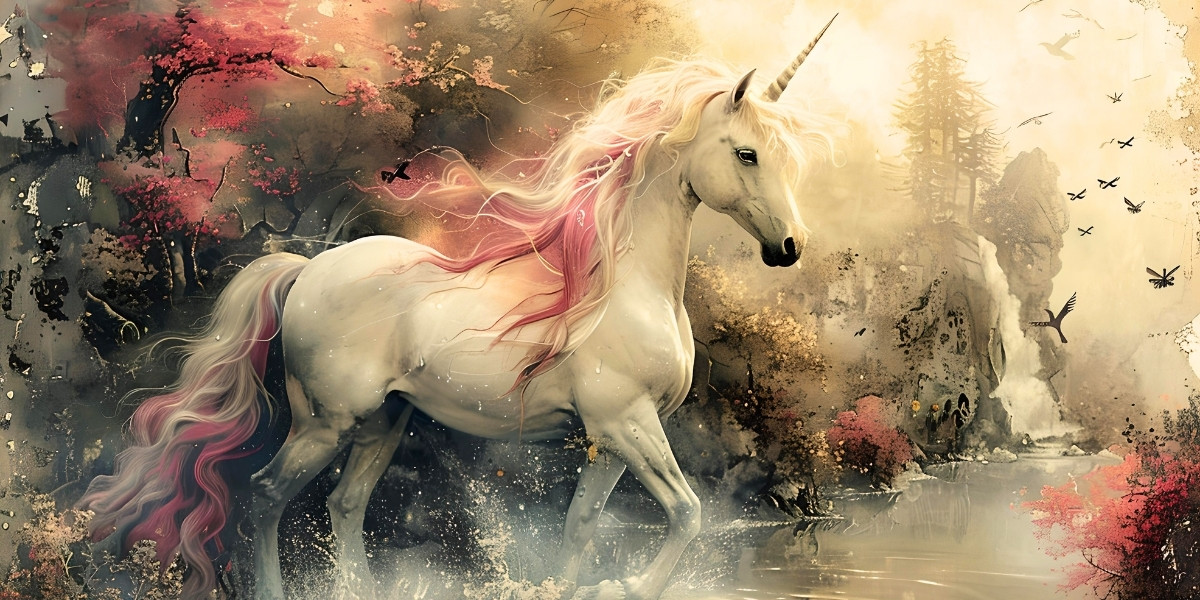
And then there is the Unicorn. Scotland’s national animal. Not the soft, glittering creature of modern imagination, but something wild, untamable, and deeply symbolic of strength and independence.
Where to Find Them
These stories are not tied to books alone. They are rooted in place.
The northern isles hold tight to tales of Selkies and the Nuckelavee, where the sea is never far and the weather shapes daily life.
The Highlands, with their vast glens and deep forests, carry stories of the Baobhan Sìth, the Cù Sìth, the Glaistig, and other creatures that move just beyond sight.
Rivers and lochs across the country, from the well-known to the quiet and unnamed, are where Kelpies and water horses are said to linger.
And in the Borders, among ruins and old pathways, the Redcap still belongs.
If you spend enough time in these places, not rushing through but paying attention, you begin to understand that the landscape and the stories are inseparable.
Why These Stories Still Matter
It’s easy to dismiss these creatures as relics. Old beliefs, shaped before science and reason took hold. But that misses the point.
These stories weren’t just attempts to explain the world. They were ways of relating to it. Ways of recognising danger, yes, but also of understanding emotion, behaviour, and the unseen parts of being human. Longing. Fear. Temptation. Loss. Transformation.
They gave form to things that are still very much with us.
And perhaps that’s why they haven’t disappeared. They’ve just shifted. Softened in some places, forgotten in others, but still present for those who look a little closer.
These are the kinds of stories we explore on the walks. Not as distant folklore, but as something woven into the places themselves.
Step Into the Story
If something in these stories has stayed with you, the best way to understand them is not just to read, but to experience the places they belong to.
Walk the edges of the river. Stand at the shoreline as the light begins to fade. Follow the quiet paths through woodland and ruin.
If you’d like to go a little deeper, you’re welcome to join a story walk.
Come and step into the story.