Inverness is often called the capital of the Highlands, yet it still carries the atmosphere of a town rather than a city. Set where the River Ness meets the Moray Firth, it has long been a place of crossing points, journeys and stories.
Its name comes from the Gaelic Inbhir Nis, meaning “mouth of the River Ness.” The name itself tells us something about the character of the place. Inverness sits at the meeting point of water, land and travel routes, making it a natural gathering place for centuries.
Today visitors come for the scenery, the proximity to Loch Ness, and its position as the gateway to the Highlands. But Inverness has much deeper layers. Long before modern tourism, this place was already significant: strategically, culturally and mythologically.
To understand Inverness properly, you have to look beneath the surface.
A Place Inhabited for Thousands of Years
The area around Inverness has been inhabited for thousands of years. Archaeological evidence shows settlement in the region stretching back to prehistoric times, long before the town itself emerged.
Its location made it important. The River Ness connects the Great Glen to the sea, forming part of a natural route that cuts across Scotland from coast to coast. Anyone moving through the Highlands, whether traders, travellers or armies, eventually passed through here.
This strategic geography meant Inverness saw both prosperity and conflict throughout its history. It was a place of markets and movement, but also a place worth defending.
Craig Phadrig: A Pictish Fortress Above the City
Just west of modern Inverness stands Craig Phadrig, an Iron Age hillfort that later became associated with the Picts.
The Picts were a mysterious group who inhabited northern Scotland in the early medieval period. Known for their carved symbol stones and skilled metalwork, they remain one of the most intriguing cultures in Scottish history.
Craig Phadrig sits on a wooded hill overlooking the city and the Beauly Firth. From its summit you can still see why it was chosen as a fortress. The views stretch across land and water, offering a natural vantage point for defence and communication.
Today the hill is a peaceful woodland walk, but standing there it’s easy to imagine the strategic importance it once held.
Tomnahurich Hill: Inverness’ Fairy Mound
Inverness is also home to one of Scotland’s most well known fairy mounds.
Tomnahurich Hill rises quietly beside the River Ness, its smooth, rounded shape immediately noticeable against the surrounding landscape. For centuries it has been associated with the Otherworld, the parallel realm of folklore where the fairy folk were believed to dwell.
The name itself hints at its meaning. Tom na h-Iùbhraich is often translated as “hill of the yew trees.”
An old local legend says its the burial place of Tomas the Rhymer, while tradition holds that the hill was once hollow and that music from the fairy world could be heard when nearby. It became widely known as a fairy knowe, a mound believed to be connected to the unseen world.
Today the hill serves as a Victorian cemetery, but its folklore remains strong. Many visitors climb the winding path simply to take in the views and experience the atmosphere of a place that has carried stories for generations.
A Town That Has Seen Hard Times and Prosperous Ones
Like much of the Highlands, Inverness has lived through periods of great change.
It grew as a market town and regional centre, but it also experienced the upheavals that shaped Highland history. The Jacobite uprisings of the 18th century brought conflict to the area, culminating in the Battle of Culloden just outside the city in 1746.
The aftermath of those events reshaped the Highlands dramatically. Yet Inverness endured and gradually developed into the administrative and cultural hub of the region.
Today it balances modern life with its historic character remarkably well.
Ness Islands, Inverness, Scotland
The River Ness and the Beauty of the City
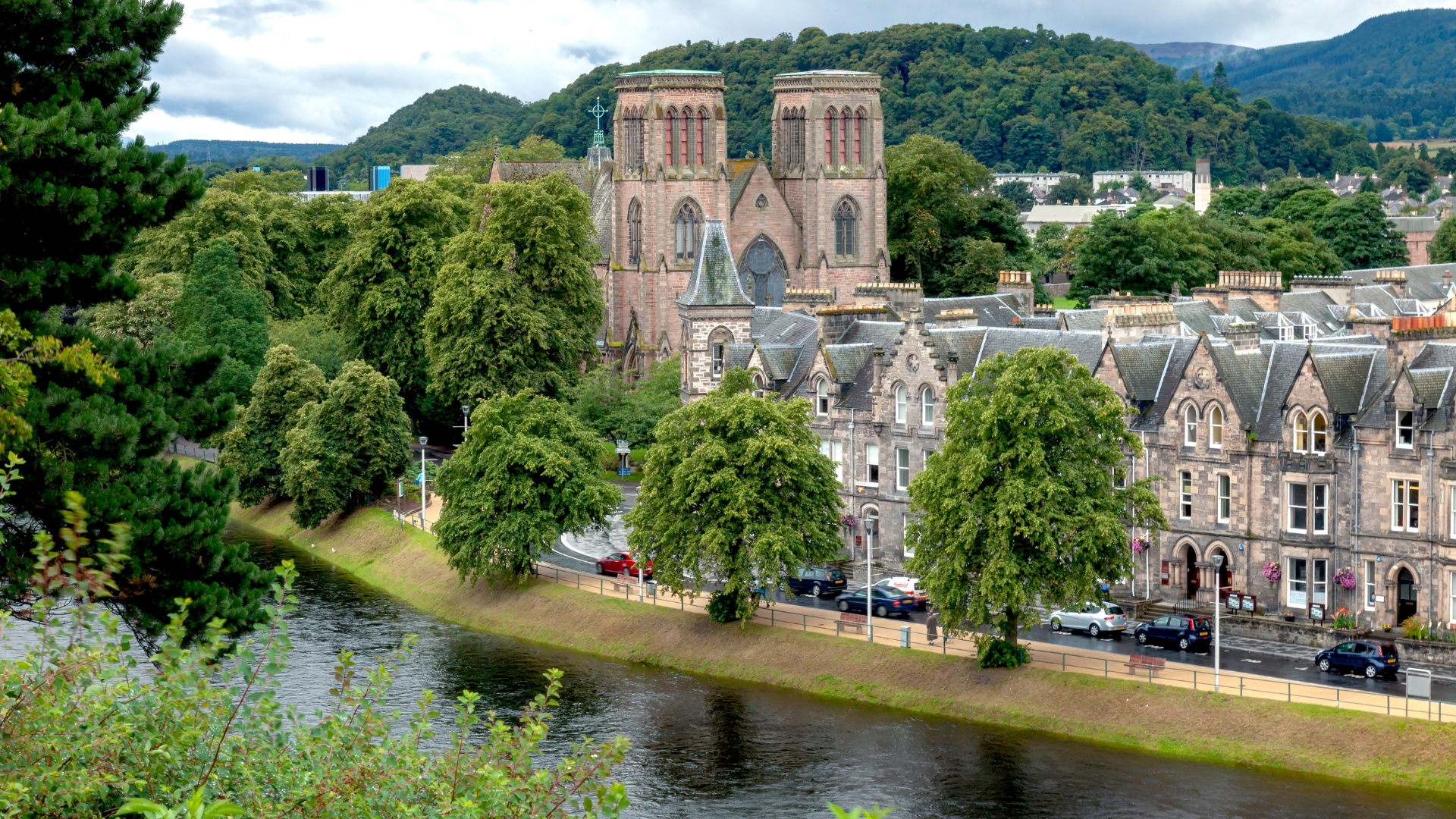
One of Inverness’ greatest charms is its setting along the River Ness.
The river runs straight through the heart of the city, creating scenic walks, bridges and green spaces that make it one of the most pleasant towns to explore on foot.
A stroll along the riverbanks reveals a mix of old stone buildings, leafy islands and wide views toward the Moray Firth. The Ness Islands, a group of wooded islands connected by Victorian suspension bridges, are particularly beautiful and offer a peaceful escape just minutes from the city centre.
It’s a place where locals walk their dogs, visitors slow their pace, and the landscape quietly reminds you that the Highlands are never far away.
A Gateway to the Highlands
Perhaps Inverness’ greatest strength is its location.
From here, visitors can easily explore some of Scotland’s most remarkable regions:
• Loch Ness, just a short drive south • Speyside, home to many of Scotland’s most famous whisky distilleries lies to the East • The west coast, with its dramatic mountains and sea lochs • The Black Isle, known for its coastal villages and wildlife • The Cairngorms National Park, with its forests and highland landscapes
Inverness works beautifully as a base for exploring the wider Highlands while still offering enough character to enjoy in its own right.
Culture, Markets and Local Character
Despite its growth, Inverness retains a friendly, mid-sized town feel.
The Victorian Market, recently revitalised, offers independent shops and cafés inside a historic covered arcade. Nearby, it’s castle and Inverness Museum and Art Gallery gives insight into the region’s history, archaeology and culture.
And in recent years the city has developed an increasingly impressive food scene.
From excellent seafood to modern Highland cuisine, there are now plenty of memorable places to eat and drink.
Many travellers pass through Inverness quickly on their way to somewhere else on their Highland Bucket list to visit.
But the city rewards those who slow down.
Its riverside walks, historic hills, folklore and proximity to some of Scotland’s most beautiful landscapes make it more than a stopping point.
Inverness sits at a meeting place of histories, cultures and stories. A threshold between lowlands and Highlands, past and present, myth and landscape.
And like many threshold places, the more attention you give it, the more it reveals.
Explore the Stories Beneath the City
If you’re curious about the deeper folklore and mythic layers of Inverness, Otherworldly Tales offers a small-group walking experience exploring the city’s threshold places and ancient stories.
From fairy mounds to Highland legends, the walk uncovers a side of Inverness many visitors never hear about.


Leave a Reply